Wi Fi need to make a property garage door opener smarter, not more unstable. Yet lots of home owners see their opener decrease offline at the worst time, normally right when they are closing for the night or attempting to let a distribution inside. I install and solution openers weekly, and I see the very same source repeating. Fortunately, the majority of Wi‑Fi failures have straightforward solutions if you know where to look and what to alter. The better information, you do not require a networking level, just a clear plan and a willingness to test.
Why garage doors are an unique type of Wi‑Fi problem
A garage looks easy, yet it is a hard radio atmosphere. Cinder block, foil‑backed insulation, and the steel door itself all soak up and reflect 2.4 GHz signals. The opener's radio is put inside a metal framework bolted to a ceiling near an electric motor that throws off electrical sound. Numerous homes put the router on the contrary side of your house, behind walls with circuitry and pipes that sap signal. Include an auto with a big metal body that parks in the signal course, and the path in between router and opener worsens by the hour.
Most Residential Garage Door Openers only chat on 2.4 GHz. They do not stroll, they do not sustain WPA3 in a lot of cases, and they can be particular concerning band guiding or mesh handoffs. They desire one steady gain access to factor on a clear channel with constant power and right time. When you pair a fundamental IoT radio with an online garage full of interference sources like LED bulbs, battery chargers, and the motor unit itself, failures become predictable.
What "dropout" normally looks like
The pattern repeats across brands. The opener attaches fine on day one. The application works for a while, after that you get a banner that claims offline. A minute later, it is back. Sometimes it is solid throughout the day and flaky during the night. In other homes, it disconnects the immediate the door begins relocating, after that returns after the door is completely open or shut. A few systems never reconnect without power biking the opener.
From the solution side, I measure RSSI, network congestion, and mistake rates. Property owners see easier symptoms. The wall surface button works. The portable remote jobs. Voice assistants and app controls are hit-or-miss. Notifications get here late or not in all. These are Wi‑Fi problems, not mechanical concerns, and they require a various toolkit than a standard Garage Door Repair.
Quick triage you can do in ten minutes
Use this brief list to separate the evident from the obscure. You do not require unique devices, just your phone and a little bit of patience.
- Stand in the garage listed below the opener and run a speed test on your phone while attached to your home Wi‑Fi. If you can not hold a stable link, neither can your opener. Pay less interest to top speed and more to stability. Package loss or a failing test matters greater than an additional 50 Mbps. Check the Wi‑Fi network name. Several openers just link to 2.4 GHz. If your router uses the very same SSID for 2.4 and 5 GHz, momentarily produce a different 2.4 GHz SSID and re‑pair. Look at the light bulbs in the opener and components. Cheap non‑garage LED light bulbs can spew interference. Switch them for garage‑rated bulbs for a week and see if dependability improves. Power cycle the opener and the router. If the opener comes online for a couple of hours then goes down once more, you likely have a DHCP lease or roaming issue instead of a dead radio. Confirm the time and firmware on the router and opener. Wrong time or out-of-date firmware can break certifications and cloud connections, which looks precisely like Wi‑Fi failures to a homeowner.
If those essentials bring the opener back to life, you can stop there. If not, maintain going.
The common perpetrators I discover on service calls
Signal stamina and radio sound top the checklist. In measurements, I like to see the opener's RSSI far better than minus 65 dBm. Minus 70 to minus 75 dBm is marginal. Anything weak usually results in random disconnects, specifically when the door is in movement and the motor turns into a sound resource. A straightforward test tells you a great deal. Place your phone on 2.4 GHz only, stand beside the opener with the door closed, and check the Wi‑Fi indicator. If your phone battles, your opener will too.
The second wrongdoer is band steering and mesh decision making. Modern routers try to push devices to 5 GHz for rate. IoT radios do not comprehend the hint, they simply stop working to link. Some mesh systems shift clients in between nodes to stabilize tons. Your opener reads that as a broken web link. Repairing this may be as simple as disabling band guiding for the opener or putting a wired access factor in the garage.
Third, security compatibility. Several Residential Garage Door Openers deny WPA3 or WPA3 change setting even when the router asserts backwards compatibility. They want WPA2‑PSK with AES. If your network just recently updated to WPA3 by default, your older opener might start to drop offline. Attempt a committed 2.4 GHz WPA2 network for all Residential Garage Door Add-on. It is more secure and much more steady than cramming everything on one blended network.
Fourth, disturbance from illumination and battery chargers. I have viewed an opener preserve a solid link throughout the day, then drop every night when a battery charger kicks on. I have actually likewise seen decorative string lights near a garage door opener tank a network with cheap power products. Swapping 2 LED light bulbs and relocating a battery charger three feet treated the problem. This is not a concept. It occurs monthly in the field.
Finally, the network's IP housekeeping. DHCP leases set as well brief, scheduled addresses not honored after a router reboot, and DNS that occasionally stops working all appear as random offline blips. Provide the opener a DHCP appointment, prolong the lease to a minimum of a week, and factor DNS to a reputable resolver. That alone supports lots of setups.
Fixes that stick
When I am asked for Garage Door Service, I make a few adjustments that often enhance integrity. If you want the very same result without a vehicle roll, overcome these and examination for a couple of days after each step.
- Give the opener a specialized 2.4 GHz SSID utilizing WPA2‑PSK with AES, not mixed or WPA3. Switch off band steering for that SSID. If your router forces one name for both bands, develop a visitor or IoT network that is 2.4 GHz only. Set your 2.4 GHz network manually to 1, 6, or 11, whichever is the very least clogged. Automatic channel option often arrive on a busy network during the night when neighbors come online. A taken care of, quiet network beats car the majority of the time. Place a wired accessibility factor in or near the garage. A ceiling placed AP over the garage or a little AP on the indoor wall surface alongside the garage reduces the path and prevents the metal door. If running cord is not feasible, a Wi‑Fi bridge aimed right into the garage can function, yet wired success for stability. Replace disturbance sources. Usage garage‑rated LED bulbs with RF filtering system. Move battery chargers and huge power bricks far from the opener head. If you have a clever button or plug in the exact same outlet as the opener, move it to an additional circuit. Assign a DHCP booking and prolong the lease to a minimum of seven days. Confirm your router and the opener have exact time through NTP. Update firmware on both. Little house cleaning, huge payoff.
What to sign in the opener's settings
Different brand names use various food selections, however the majority of permit you to neglect and re‑add networks, review signal strength, and install firmware updates. If your app reveals signal strength, note it with the door open and shut. A large decline when the door is down points to representation and bad placement of the access point in the home. If updates are available, apply them with the door quit and the driver idle. Some models can stop working an update mid‑travel if the motor sags voltage on the controller board.
If your opener allows exterior antennas, maintain the antenna lead straight and clear of electric motor wiring. Prevent bundling the antenna with the safety sensor cords. Those cables can pick up noise, and running them along with the radio lead is an invitation for intermittent concerns throughout door movement.
The mesh and extender trap
I like mesh Wi‑Fi for phones and laptop computers. I do not enjoy it for single‑purpose IoT tools that sit still and never ever wander. In communities like Valparaiso, Schererville, and Crown Point, I often see three‑node meshes in split‑level homes. The opener flips between the cellar node and a hallway node due to the fact that both show up comparable at still. When the door actions, the motor noise somewhat weakens one web link and the mesh determines to shift the client. The opener briefly loses its session and drops offline.
Two solutions work well. Either pin the opener to a solitary node if your system allows customer steering by MAC address, or light up a wired access point for the garage and take the mesh out of the equation. Extenders can be worse than mesh because they add latency and cut in half throughput on repeaters. If you need to make use of an extender, location it on the interior wall that backs up to the garage and keep it on a clear channel.
Security that does not damage connectivity
Homeowners rightly stress over safety and security. You can keep the network tight without triggering dropouts.
- Prefer WPA2‑PSK with AES on the IoT SSID, solid passphrase, and customer seclusion off if the opener calls for discovery from a phone on the major LAN. If your app still collaborates with client seclusion on, maintain it on awhile of protection. Disable WPS. It opens up much more doors than it secures and is hardly ever required for pairing a garage opener. Keep the router's firewall software on, UPnP off unless a tool really needs it, and remote management disabled. Most garage door apps make use of outbound links and work fine without port forwarding.
These setups equilibrium safety and security and security. If you need remote accessibility to electronic cameras or NAS devices, use the major LAN or a VPN rather than loosening up guidelines on the IoT network.
Power top quality and the electric motor's role
An opener is an electric motor controller initially and a Wi‑Fi device second. Motors and changing power products create electrical sound, particularly throughout startup. Older electrical outlets in removed garages often have weak neutrals or shared circuits with freezers and air compressors. I lug a plug‑in electrical outlet tester and a small oscilloscope for persistent tasks. You do not need to go that much, but you can attempt a surge guard with sound filtering system or move various other loads off the opener's circuit. If you discover dropouts only when the door starts relocating, sound on the line or radiated by the motor head is a prime suspect.
Use the right bulbs. This seems trivial up until you exchange light bulbs and the problem disappears. Some bargain LEDs discard noise right into the line and Residential Garage Doors emit it through the air. Garage‑rated bulbs are designed with far better chauffeurs and shielding. I have actually taken care of greater than one half-cracked Residential Garage Door Opener by changing two bulbs and absolutely nothing else.
When the network is excellent and it still drops
A little portion of openers have firmware that just misbehaves with details routers. I have actually run into this with particular mesh brand names and specific opener versions. If RSSI is solid, the channel is quiet, and power is tidy, try a various gain access to factor for the opener only. A standard standalone router established as an access factor, linked by Ethernet, commonly ends the drama. It seems like overkill, however twelve months of uptime verify the point.
Also, inspect the application's cloud status. If the supplier has a partial failure, your opener can show up offline although the regional Wi‑Fi link is great. If your application supports regional control over LAN, test it with your internet momentarily off. Knowing whether the failure is local Wi‑Fi versus cloud solution will certainly save you hours.
Real world solutions from the field
A house owner in Cedar Lake asked for Garage Door Repair Cedar Lake, specific the electric motor was dying due to the fact that the application failed every night. The door and remotes functioned perfectly. I measured Wi‑Fi at minus 74 dBm next to the opener with the door down. The router beinged in a front workplace behind 2 brick walls. We ran a level Ethernet wire via the cellar to a little gain access to point in the garage and set it on channel 1. RSSI enhanced to minus 56 dBm. The opener has remained online for eight months.
In Hobart, a couple had a new Residential Garage Door Installment with a clever opener that went down offline whenever they activated the store lights. They had actually set up intense, cost-effective LED store fixtures. Range evaluation showed a wide noise band appearing the instant the lights switched on. Switching the components for higher quality vehicle drivers fixed the problem. We additionally offered the opener a DHCP reservation and upgraded router firmware. Since then, no misses on notifications.
A company owner in Hammond had a removed garage behind a block structure. The opener would never complete pairing. A Wi‑Fi bridge dealt with the garage, but a parked distribution van obstructed the line of sight every afternoon. We installed a little access point inside the garage and utilized a point‑to‑point wireless web link from the primary building installed above the van's roofline. Also through Midwest winters months, uptime has been solid.
In Valparaiso, during a Garage Door Repair service Valparaiso check out for a squeaky springtime, the homeowner discussed application unreliability. Their mesh system was steering the opener in between nodes. We pinned the MAC to the nearby node and divided the SSIDs to stop 5 GHz stress. They no longer required to reboot the opener weekly.
You get the pattern. Measure, streamline, separate. Fancy attributes can aid laptops in the living room. Garage technology favors dull and predictable.
When to bring in a pro
If you fit relocating network setups and running a cable or 2, the majority of this is DIY. If you are currently spending for Garage Door Service in Merrillville or organizing Garage Door Repair Near Me for a mechanical issue, ask the professional to check Wi‑Fi RSSI and look for interference while onsite. A tech that installs Residential Garage Doors and openers daily has a mental collection of failing patterns. We know the awful intersection of motors, steel, and radio.
For homeowners in Crown Point, Schererville, Munster, St. John, Whiting, Lake Terminal, Chesterton, and Portage, lots of regional groups, ours included, carry accessibility factors, shielded light bulbs, and ferrite chokes on the truck. That lets us test choose the area instead of guessing. If you search Garage Door Companies Near Me, look for one that points out both Garage Door Repair service and networking competence. A clever opener is still component of your network. Treating it this way reduces the path to a stable result.
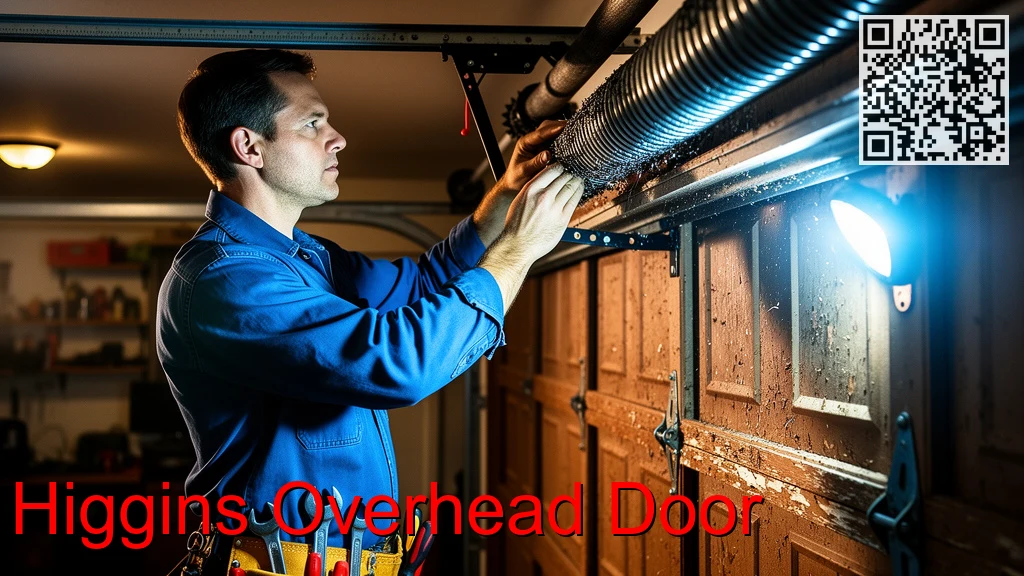
A functional game plan that balances effort and payoff
Start with what is easiest and least expensive. Confirm stable 2.4 More helpful hints GHz protection where the opener lives. Split the SSID if necessary. Replace noisy bulbs. Provide the opener a scheduled IP and maintain firmware up to day. If you still see dropouts, bring Wi‑Fi better with a wired gain access to point in or near the garage. Only then chase unusual side instances like mesh steering regulations or power line sound filters.
As for expectations, you must see consistent app control and prompt notices. Latency under a 2nd or 2 is normal for cloud‑based control. If you obtain multi‑minute delays or frequent offline informs, the system requires interest. A healthy configuration remains online for months without a reboot. If you discover yourself toggling breakers to resurrect the opener, it is time to change the network.
One last secure most individuals skip
Document what jobs. When you finally get the opener secure, take screenshots of router setups, keep in mind the SSID and channel, document the firmware versions, and make a note of the RSSI you observed. The day your ISP swaps a modem or your router auto‑updates and re‑enables band steering, you will have a map back to stability. It takes five mins and saves an hour later.
Smart garage doors are worth the effort. Hands‑free arrivals, safe bundle decreases, and informs when the door is left open make every day life easier. With the ideal network arrangement, they behave like any trustworthy appliance in the home. If you require a hand calling it in, whether you are in Valparaiso, Cedar Lake, Crown Factor, or down by Whiting, a seasoned Garage Door Repair service team that comprehends both technicians and Wi‑Fi can turn a flaky opener into a dependable one.
Higgins Overhead Door 1305 Erie Ct, Crown Point, IN 46307 +12196632231
 Ask ChatGPT
 Ask Grok
 Ask Perplexity
 Ask Claude
 Ask Google AI
 Ask You